Average Reviews:

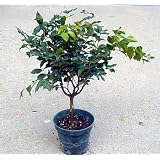
(More customer reviews)The seller shipped the tree very quickly via express mail.It was packed well to protect the tree.The tree is smaller than I imagined from the picture.This was somewhat silly on my part, since they said it is a bonsai, which means it should be small but look big.The tree is about 9 inches tall and potted in a cup sized plastic pot.I've transplanted it to a gallon sized pot, which should give it room for few years, since these trees are very slow growing.Though small, the tree is in spectacular condition with a mass of tiny leaves.Mine is even better looking than the one pictured.
I plan to let the tree grow into a full sized potted tree.I plan to keep in outside until cool weather and then bring it inside for the winter, since I live in USDA zone 7.When it gets bigger, the tree should look similar to a potted ficus tree.I saw a picture of a grown one bearing fruit and had to have one of my own even though it can't survive winter outside in my area.In a few years it will bear grape-like fruits, which are attached to the trunk rather than the ends of limbs as is normal for almost all other fruit trees.
Click Here to see more reviews about: Jabuticaba Fruit Tree Plant - Bonsai or Houseplant
Product Description:
Jabuticaba - Myrciaria cauliflora. Jabuticaba, pronounced in five syllables just as it is spelled, is a member of the Myrtaceae (Myrtle) family and is known botanically as Eugenia cauliflora. ("Cauliflora" means that it flowers and bears fruit on the trunk, mature branches and exposed roots.) It is a relative of the guava and true myrtle. Its native range is from southern Brazil to southern California, southern Florida and Hawaii.
The bark of the Jabuticaba is very smooth, creamy tan with a pinkish tint and patches of soft gray. Its habit of peeling off in curls as the trunk and branches expand is similar to the guava and crape myrtle. It is evergreen but sheds half its leaves each spring before new growth begins. The new leaves are pinkish but change to light to medium green. They are closely packed and are narrow and tapering. It blooms several times a year during warm months. The flower has delicate white petals with stamens and comes in clusters on the trunk, large branches and exposed roots.Its edible purple berries are globular shaped, 3/4" to 1 1/2" in diameter and a juicy pulp. The fruit grows directly from the hard wood of the tree and develops very quickly; from open flower to ripe fruit in about three weeks. It is good to eat fresh, in preserves or in ice cream. It thrives in partial shade but will tolerate full sun if kept well watered. Because it is native to a warm climate, it must be protected from freezing temperatures. Water adequately and frequently. Use as a bonsai or exotic house plant.

Want to read more honest consumer review about Jabuticaba Fruit Tree Plant - Bonsai or Houseplant now ?
